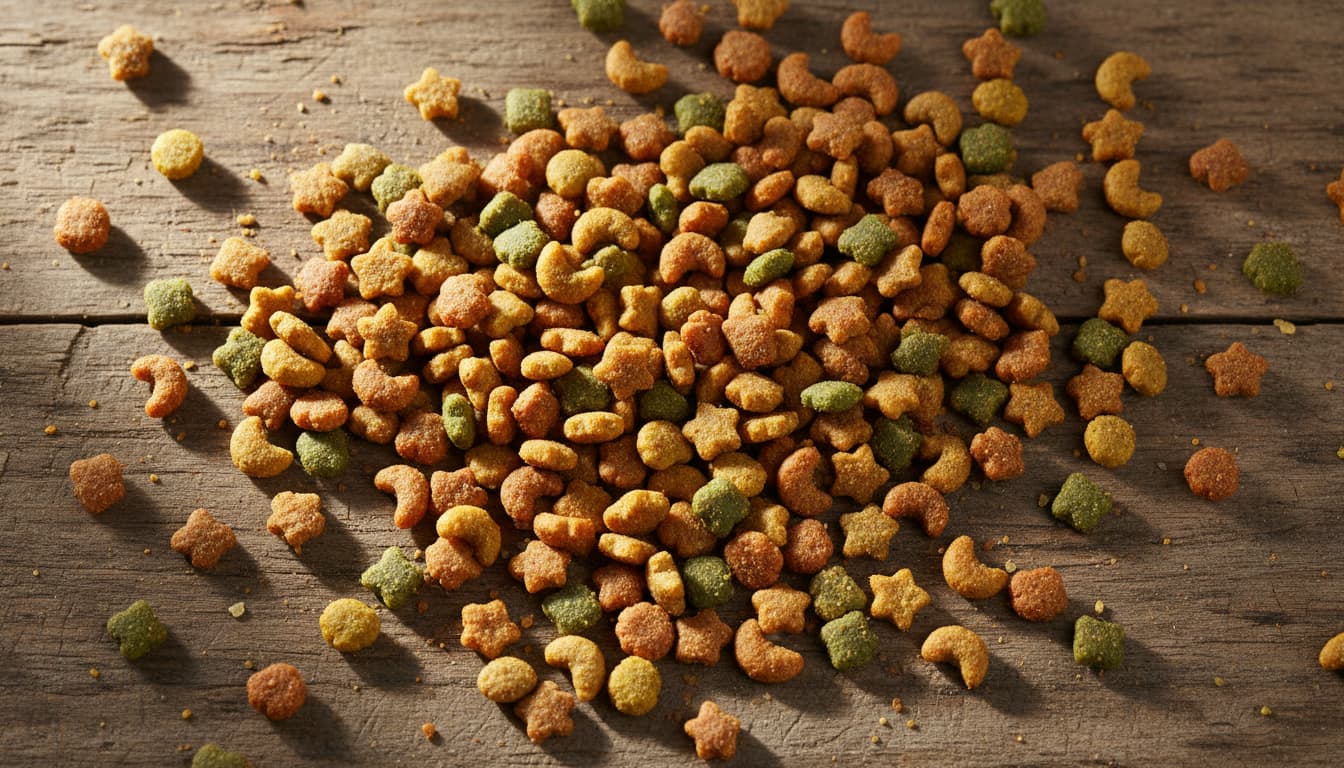
In short, what you will discover in this article: how to select cat kibble suited to each age and need, understand their composition to avoid harmful ingredients, and optimize your budget while ensuring a healthy diet for your companion.
1. Introduction — why choosing the right kibble matters
Choosing cat kibble is a crucial step to guarantee your pet’s health and well-being. A balanced diet promotes good digestion, a shiny coat, and optimal energy. Especially for kittens, nutritional needs are specific and evolve with age. Opting for suitable kibble prevents deficiencies and long-term health problems.
2. The different types of kibble
2.1 Kitten kibble
Kitten kibble is formulated to support rapid growth and organ development. They generally contain a high protein rate (between 40 and 44%) and appropriate fats to provide necessary energy. Favor brands known for transparency about their composition, like Ziggy, which offers kibble made in France with strict veterinary supervision.
2.2 Adult cat kibble
Adult cat kibble balances proteins, fats, and fiber to maintain overall health. They should be adapted to your cat’s activity level. Some formulas include natural ingredients and avoid chemical preservatives, which is a mark of quality.
2.3 Senior cat kibble
Kibble for older cats often contains fewer calories and more fiber to aid digestion. They also include specific nutrients to support joints and kidney functions, essential at this age.
2.4 Kibble for sterilized cats or specific needs
Sterilized cats tend to gain weight, so it is advisable to choose light kibble or specially formulated to limit this risk. Hypoallergenic cat kibble is also an option for sensitive or allergic pets, notably avoiding dominant plant proteins.
3. Composition and nutritional quality
3.1 Proteins: sources and recommended percentages
Protein quality is paramount. Kibble should prioritize named meats (chicken, beef, fish) at the top of the ingredient list, with protein content between 30 and 44%. High biological value animal proteins ensure better assimilation.
3.2 Fats, carbohydrates, and fibers: role and impact
Fats, present between 12 and 15%, provide energy and promote a healthy coat. Carbohydrates should be limited, especially cereals, as some cats are sensitive to them. Fibers contribute to digestion and regulate intestinal transit.
3.3 Additives, preservatives, and labels (organic, grain-free, etc.)
Avoid kibble containing colorants, BHA, or chemical preservatives. Organic cat kibble guarantees a more natural composition respectful of the environment. Grain-free cat kibble is often recommended to limit allergy risks.
4. Health and specific needs
4.1 Allergies and food intolerances
Hypoallergenic cat kibble is designed to avoid common allergens. It’s important to monitor your cat’s reaction when changing food and consult a vet if in doubt.
4.2 Kidney problems and urinary tract care
Some cats require specific kibble to support kidney function or prevent urinary issues. These formulas often contain less phosphorus and balanced minerals.
4.3 Weight management and light kibble
For overweight cats, light kibble reduces calorie intake while maintaining good satiety. They are often high in fiber and protein to preserve muscle mass.
5. Choosing based on budget — comparison and value for money
To make the best choice of cat kibble, compare prices based on composition and nutritional quality. Here’s a simple method:
- Check the ingredient list and prefer French or European meats.
- Compare protein and fat content.
- Assess the presence or absence of chemical additives.
- Look at the price per kilo for true value for money.
For example, Ziggy and Elmut kibble are often praised for their premium quality and transparency, despite a slightly higher price. This choice ensures better long-term health.
6. Food transition and recommended quantities
6.1 Gradual transition method
To avoid digestive disorders, transition to new kibble should be done gradually over 7 to 10 days. Start by mixing 25% new kibble with 75% old ration, then increase the proportion up to 100%.
6.2 Indicative portion table by age/weight/activity
| Age / Weight | Low activity | Normal activity | High activity |
|---|---|---|---|
| Kitten (1-6 months) | 50-70 g/day | 70-90 g/day | 90-110 g/day |
| Adult cat (4 kg) | 40-50 g/day | 50-60 g/day | 60-70 g/day |
| Senior cat (4 kg) | 35-45 g/day | 45-55 g/day | 55-65 g/day |
These amounts are indicative and should be adjusted based on your cat’s weight and physical condition.
7. Practical tips and useful links
- For optimal coat care of your cat, discover how to choose the ideal brush for long-haired dogs and cats.
- To better understand the role of fur and its care, consult our article on the definition of fur.
- Looking for a practical solution to manage dead hairs? The animal hair removal brush is an essential accessory.
8. Conclusion
Choosing the right cat kibble is essential to ensure a healthy diet adapted to every stage of your companion’s life. By favoring quality products with transparent composition and natural ingredients, you contribute to their long-lasting health. Don’t hesitate to compare brands and follow a gradual food transition for better digestive comfort.
To deepen your knowledge about coat care, explore our specialized guides on brushing and fur maintenance.
For a detailed comparison of the best kibble in 2026, you can visit Gang des Moustaches, which offers precise analysis of compositions and nutritional qualities.